Public transport

Getting to Limpertsberg by public transport

Limpertsberg has 29 stops, served by 1 tram line and 74 bus lines.

Direct lines run to Kirchberg, Bertrange, Hamilius (Bus), Steinsel, Mersch, Merl, Luxembourg, and Echternach.

Buses, the tram and trains are free within Luxembourg; only 1st class on trains needs a ticket.

Within a short walk of its stops: Villa Vauban – Luxembourg City Art Museum, Dräi Eechelen Museum: Fortress, History, Identity, and Panoramic Elevator of the Pfaffenthal.

Plan a journey to Limpertsberg
Places to see in Limpertsberg

The Villa Vauban is located in the heart of the city, surrounded by historic parkland that is the perfect place for relaxation. The stately urban villa was built in 1873 on foundations that date back to the time when…

Read more

The Villa Vauban is located in the heart of the city, surrounded by historic parkland that is the perfect place for relaxation. The stately urban villa was built in 1873 on foundations that date back to the time when Luxembourg was a fortified town. A modern extension has been added and the building was completely refurbished in the early 2000s. The museum presents changing exhibitions based on its own collections (European art from the 17th to the 19th century and Luxembourgish art from the 20th and 21st centuries).

  • 18 Avenue Emile Reuter L-2420 Luxembourg City
  • Website

A fortified castle becomes a cultural centre: the Dräi Eechelen Museum is located inside the renovated Fort Thüngen, first built in 1732-33, and is right next to the Mudam, Museum of Modern Art. The museum’s historic…

Read more

A fortified castle becomes a cultural centre: the Dräi Eechelen Museum is located inside the renovated Fort Thüngen, first built in 1732-33, and is right next to the Mudam, Museum of Modern Art. The museum’s historic home is itself an important element in the permanent exhibition there entitled “Fortress, History, Identity”. With its impressive underground tunnels and mines, the building still largely remains as it was when it was last extended in 1836/37. On a guided tour, visitors can discover over 600 objects and original documents on permanent display behind the fortified walls. On the first floor, the museum regularly presents special contemporary exhibitions. Discover the Dräi Eechelen Museum through immersive and interactive 3D tours.

  • 5 Park Dräi Eechelen L-1499 Luxembourg City
  • Run by Museum Dräi Eechelen - Fortress, History, Identities
  • Website

There is a new way to explore Luxembourg since Europe’s most modern tram service and a new funicular railway started service in December 2017. The tram runs along the prestigious avenue J.F. Kennedy in the Kirchberg…

Read more

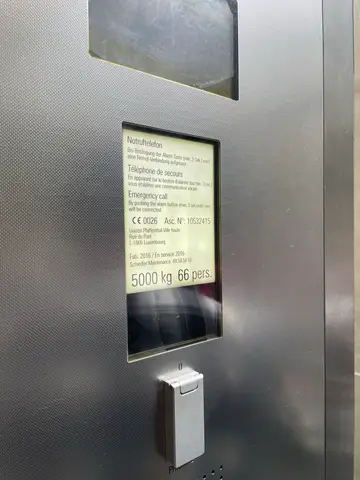
There is a new way to explore Luxembourg since Europe’s most modern tram service and a new funicular railway started service in December 2017. The tram runs along the prestigious avenue J.F. Kennedy in the Kirchberg area, and is served by the Pfaffenthal-Kirchberg funicular which provides a link to the national train network. A few minutes’ walk through the valley from this train station brings you to a stunning panoramic lift to the upper town centre. Once at the top, you’re only a short walk from the old town, a Unesco world heritage site. Thus you move from the ultra-modern to the historic in just a few minutes. The glass elevator connects the "Pescatore" park located in the city centre to the Pfaffenthal area at the bottom of the Alzette valley. The ride in the glass elevator features sweeping views (71m high) for pedestrians and cyclists alike. Using the elevator is free of charge.

  • 1 Montée du Pfaffenthal L-2329 Luxembourg
  • Website

Since its creation in 1977 by the City of Luxembourg, the Cinémathèque de la Ville de Luxembourg lives by the motto “to preserve and to show” international film heritage. The Cinémathèque’s extensive archives were…

Read more

Since its creation in 1977 by the City of Luxembourg, the Cinémathèque de la Ville de Luxembourg lives by the motto “to preserve and to show” international film heritage. The Cinémathèque’s extensive archives were started by its first curator, Fred Junck, and now constitute a true Cave of Wonders of some 20,000 prints, with titles ranging from classics to much rarer features. The collection also includes other historical artefacts: posters, photos, books, magazines, and optical objects such as magic lanterns. However, a film does not exist if it is not screened. Almost 50 years after the first public screening took place in the same historic cinema located in a former monastery, the Cinémathèque organized its first film presentation in February 1977: “La Bête Humaine” by Jean Renoir. The Cinémathèque’s big screen continues to enchant audiences right up until this day and it is the last cinema in Luxembourg to still screen films on celluloid (mainly from its own collection). It thus offers spectators the opportunity to appreciate the physical materiality of film in all its facets and unite them with all those who have seen movies in the same way for the past 120 years. Besides its daily screenings, the Cinémathèque is also a place for conviviality, debates and encounters with renowned cinema personalities. The list of guests that have visited over the decades is long and includes the likes of Jonas Mekas, Juliette Binoche, Joseph L. Mankiewicz, Bertrand Tavernier, Costa-Gavras, Margarethe von Trotta, Abbas Kiarostami, Mike Leigh, and, more recently, Abel Ferrara, Pedro Costa and Radu Jude.

  • 17 place du Théâtre L-2613 Luxembourg City
  • Website

A Kinepolis cinema, Ciné Utopia opened its doors in 1983. After expansion and renovation, the Ciné Utopia miniplex (5 theaters and 606 seats, including 32 Cosy Seats) found its calling with an arthouse program that…

Read more

A Kinepolis cinema, Ciné Utopia opened its doors in 1983. After expansion and renovation, the Ciné Utopia miniplex (5 theaters and 606 seats, including 32 Cosy Seats) found its calling with an arthouse program that focuses on quality cinema from around the world.

  • 16 avenue de la Faïencerie L-1510 Luxembourg City
  • Website

The locals also call it New Theatre; it was built on the occasion of the millennium of the city of Luxembourg between 1960 and 1964 according to the plans of the Parisian architect Alain Bourbonnais. It embodies…

Read more

The locals also call it New Theatre; it was built on the occasion of the millennium of the city of Luxembourg between 1960 and 1964 according to the plans of the Parisian architect Alain Bourbonnais. It embodies European collaboration, as the building materials and the fittings come from Luxembourg, Belgium, France, Germany, Austria, Switzerland and the Netherlands. After important renovation works on the building itself, but above all on the stage and on the technical installations, it has today a grand salle (943 seats) and a so-called studio (sort of adaptable Black Box with between 100 and 400 seats). It is a venue for drama in different languages, opera and dance.

  • 1 rond-point Schuman L-2525 Luxembourg City
  • Website
Data: Administration des transports publics and Luxembourg for Tourism, CC BY 4.0