Public transport

Getting to Pfaffenthal-Kirchberg by public transport

Pfaffenthal-Kirchberg has 1 stop, served by 3 train lines. Trains stop at Pfaffenthal-Kirchberg, Gare.

Direct lines run to Luxembourg, Troisvierges, Diekirch, Mersch, Gouvy, Esch-sur-Alzette, Rodange, and Pétange.

Buses, the tram and trains are free within Luxembourg; only 1st class on trains needs a ticket.

Within a short walk of its stops: Dräi Eechelen Museum: Fortress, History, Identity, Panoramic Elevator of the Pfaffenthal, and Mudam - The Contemporary Art Museum of Luxembourg.

Plan a journey to Pfaffenthal-Kirchberg
Places to see in Pfaffenthal-Kirchberg

A fortified castle becomes a cultural centre: the Dräi Eechelen Museum is located inside the renovated Fort Thüngen, first built in 1732-33, and is right next to the Mudam, Museum of Modern Art. The museum’s historic…

Read more

A fortified castle becomes a cultural centre: the Dräi Eechelen Museum is located inside the renovated Fort Thüngen, first built in 1732-33, and is right next to the Mudam, Museum of Modern Art. The museum’s historic home is itself an important element in the permanent exhibition there entitled “Fortress, History, Identity”. With its impressive underground tunnels and mines, the building still largely remains as it was when it was last extended in 1836/37. On a guided tour, visitors can discover over 600 objects and original documents on permanent display behind the fortified walls. On the first floor, the museum regularly presents special contemporary exhibitions. Discover the Dräi Eechelen Museum through immersive and interactive 3D tours.

  • 5 Park Dräi Eechelen L-1499 Luxembourg City
  • Run by Museum Dräi Eechelen - Fortress, History, Identities
  • Website

There is a new way to explore Luxembourg since Europe’s most modern tram service and a new funicular railway started service in December 2017. The tram runs along the prestigious avenue J.F. Kennedy in the Kirchberg…

Read more

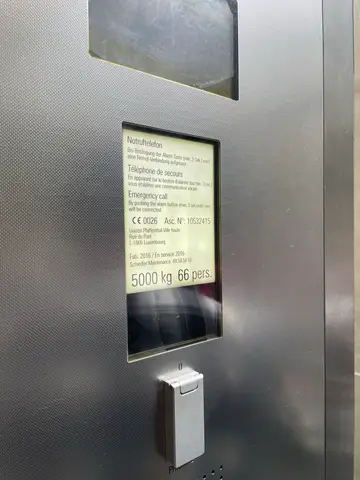
There is a new way to explore Luxembourg since Europe’s most modern tram service and a new funicular railway started service in December 2017. The tram runs along the prestigious avenue J.F. Kennedy in the Kirchberg area, and is served by the Pfaffenthal-Kirchberg funicular which provides a link to the national train network. A few minutes’ walk through the valley from this train station brings you to a stunning panoramic lift to the upper town centre. Once at the top, you’re only a short walk from the old town, a Unesco world heritage site. Thus you move from the ultra-modern to the historic in just a few minutes. The glass elevator connects the "Pescatore" park located in the city centre to the Pfaffenthal area at the bottom of the Alzette valley. The ride in the glass elevator features sweeping views (71m high) for pedestrians and cyclists alike. Using the elevator is free of charge.

  • 1 Montée du Pfaffenthal L-2329 Luxembourg
  • Website

Mudam is a place of sheer aesthetic delight. The building itself, designed by Chinese-American architect Ieoh Ming Pei, is already worth the visit.

Read more

Mudam is a place of sheer aesthetic delight. The building itself, designed by Chinese-American architect Ieoh Ming Pei, is already worth the visit. As a museum dedicated to contemporary art, Mudam brings together a wide range of artistic disciplines, including painting, sculpture, design and performance. Built on the site of the historic Fort Thüngen in the Dräi Eechelen Park, the museum integrates the fort’s foundations into its architecture, where they remain visible in places, while also blending seamlessly into its park surroundings. Works from both the permanent collection and temporary exhibitions can also be found outdoors in the park, which offers beautiful views over the city. In addition to its exhibitions, Mudam offers a rich public programme. With your ticket, you can often take part in activities and workshops, and the museum also hosts a wide range of events throughout the year, so it’s worth checking the programme ahead of your visit. The museum is also home to the café-restaurant Chiche!, a social cohesion project, where you can enjoy a meal or simply stop by for a coffee before or after your visit.

  • 3 Park Dräi Eechelen L-1499 Luxembourg City
  • Run by Mudam Luxembourg Musée d’Art Moderne Grand-Duc Jean
  • Website

Since its creation in 1977 by the City of Luxembourg, the Cinémathèque de la Ville de Luxembourg lives by the motto “to preserve and to show” international film heritage. The Cinémathèque’s extensive archives were…

Read more

Since its creation in 1977 by the City of Luxembourg, the Cinémathèque de la Ville de Luxembourg lives by the motto “to preserve and to show” international film heritage. The Cinémathèque’s extensive archives were started by its first curator, Fred Junck, and now constitute a true Cave of Wonders of some 20,000 prints, with titles ranging from classics to much rarer features. The collection also includes other historical artefacts: posters, photos, books, magazines, and optical objects such as magic lanterns. However, a film does not exist if it is not screened. Almost 50 years after the first public screening took place in the same historic cinema located in a former monastery, the Cinémathèque organized its first film presentation in February 1977: “La Bête Humaine” by Jean Renoir. The Cinémathèque’s big screen continues to enchant audiences right up until this day and it is the last cinema in Luxembourg to still screen films on celluloid (mainly from its own collection). It thus offers spectators the opportunity to appreciate the physical materiality of film in all its facets and unite them with all those who have seen movies in the same way for the past 120 years. Besides its daily screenings, the Cinémathèque is also a place for conviviality, debates and encounters with renowned cinema personalities. The list of guests that have visited over the decades is long and includes the likes of Jonas Mekas, Juliette Binoche, Joseph L. Mankiewicz, Bertrand Tavernier, Costa-Gavras, Margarethe von Trotta, Abbas Kiarostami, Mike Leigh, and, more recently, Abel Ferrara, Pedro Costa and Radu Jude.

  • 17 place du Théâtre L-2613 Luxembourg City
  • Website
~4 min

The funicular is a key element of the intermodal exchange hub linking the Pfaffenthal district to the Kirchberg Plateau. Inaugurated in 2017, it connects the Luxembourg rail network with the tram, bus and cycle track.

Read more

The funicular is a key element of the intermodal exchange hub linking the Pfaffenthal district to the Kirchberg Plateau. Inaugurated in 2017, it connects the Luxembourg rail network with the tram, bus and cycle track. Located near the Pont Rouge, the funicular allows passengers coming from the train to climb 40 metres in 63 seconds and continue their journey towards the districts of Kirchberg, Limpertsberg or the Ville-Haute. The funicular is completely free of charge, like all public transport in Luxembourg, and offers breathtaking views of the valley and the Grand Duchess Charlotte Bridge.

  • Avenue John F. Kennedy L-1115 Luxembourg
  • Website

The Vauban Towers are named after the medieval constructions they replaced: the Eich Gate and the Bons Malades Gate.

Read more

The Vauban Towers are named after the medieval constructions they replaced: the Eich Gate and the Bons Malades Gate. During the French siège, Vauban identified the largely unfortified Pfaffenthal and the adjacent heights as the fortress' weak points. Consequently in 1685 he had these sections incorporated into the fortress. He reinforced the heights with two forts and closed the vallex off with a protective wall, which linked Fort Berlaymont on the city side to the new forts on the Grünewald heights opposite. Doors on the first floor opened to the rampart walkway in the protective walls. The Vauban Tower is home to a small cinema that presents a free documentary on the historical development of the Pfaffenthal. Visitors can enter between 10:00 and 18:00.

  • rue Vauban L-2143 Luxembourg
Data: Administration des transports publics and Luxembourg for Tourism, CC BY 4.0