Public transport

Getting to Rumelange by public transport

Rumelange has 14 stops, served by 1 train line and 18 bus lines. Trains stop at Rumelange, Gare.

Direct lines run to Esch-sur-Alzette, Ottange, Dudelange, Luxembourg, Belvaux, Kayl, Ehlerange, and Bettembourg.

Buses, the tram and trains are free within Luxembourg; only 1st class on trains needs a ticket.

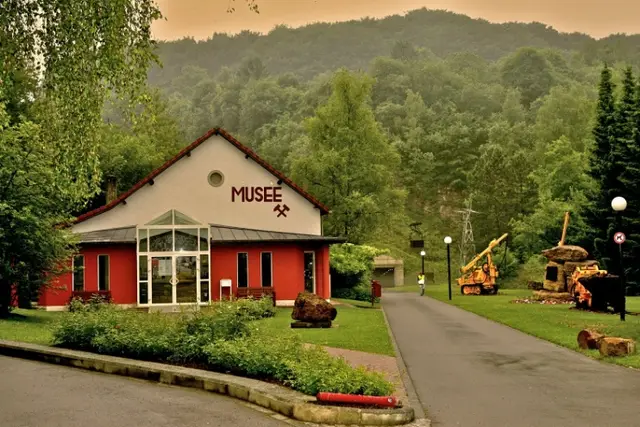
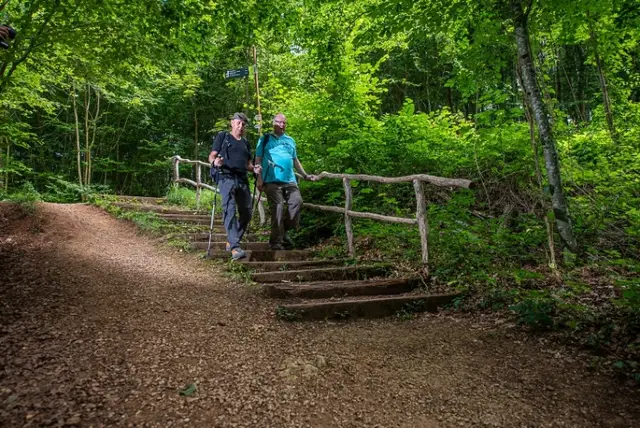
Within a short walk of its stops: National Mining Museum, Industrial history tour, and 23 CFL hiking trails from station to station : Rumelange - Kayl.

Plan a journey to Rumelange
Places to see in Rumelange

The iron mines have played an active role in Luxembourg’s history and economy. From the 1870s to the 1990s, Luxembourg's iron mines had a major impact on the lives of the country’s inhabitants.

Read more

The iron mines have played an active role in Luxembourg’s history and economy. From the 1870s to the 1990s, Luxembourg's iron mines had a major impact on the lives of the country’s inhabitants. Nowadays, we have forgotten what the daily life of the miners was like, the difficulty of their work, the kinds of tools they used. At the National Mining Museum, you’ll learn all about how mining worked and discover more than a century of technological development through its a large collection, most of which is displayed in underground galleries. The tours of the mine are always for groups, escorted by a museum guide. More information about accessibility can be downloaded as a.pdf file

  • Carreau de la mine Walert L-3714 Rumelange
  • Website

Want to discover the places where steel was forged and where ore and slate were mined? Interested to find out exactly when and how Luxembourg was powered up with electricity? Follow us and use your LuxembourgPass to…

Read more

Want to discover the places where steel was forged and where ore and slate were mined? Interested to find out exactly when and how Luxembourg was powered up with electricity? Follow us and use your LuxembourgPass to take advantage of discounted prices on your industrial tour. Our journey into the industrial past starts in the south, before heading north and finishing up in the Mullerthal region in the east of the country. You should allow two or three days to complete the tour.

  • L-1432 Luxembourg
  • Run by VisitLuxembourg

The hiker leaves Rumelange through a former mining area via a steadily ascending route, which at one point touches the border to France. The path leads in a large loop through an extensive forest area. Passing several…

Read more

The hiker leaves Rumelange through a former mining area via a steadily ascending route, which at one point touches the border to France. The path leads in a large loop through an extensive forest area. Passing several sights, it then descends to the Kayl station. You can already finish this route in Tétange. Via the signposted feeder CFL 23a from Bromeschbierg, you reach the Tétange station after descending 900 meters. This shortens the total length of the route to 10.6 km. Note: Only a few trains run to and from the stations at Kayl, Tétange and Rumelange. Alternative: Bus. Please take the timetables into account when planning your route.

  • Grousstrooss L-3730 Rumelange
  • Run by Visit Minett
  • Website

The Minett Trail leads trough the Minett Region on 90 kilometres. You can split the trail in ten stages on which you can discover little villages and bigger cities, but also hike through eight nature reserves. These…

Read more

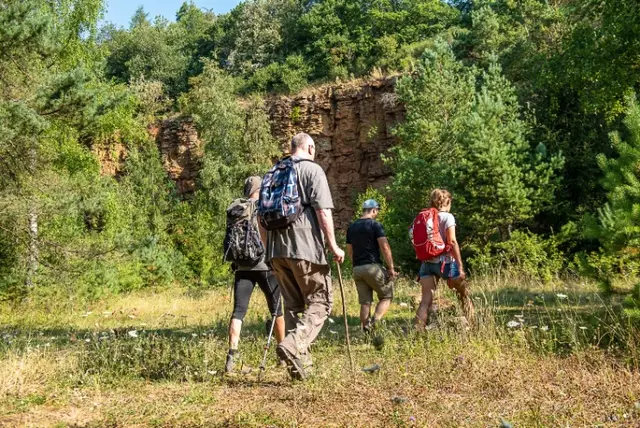
The Minett Trail leads trough the Minett Region on 90 kilometres. You can split the trail in ten stages on which you can discover little villages and bigger cities, but also hike through eight nature reserves. These charm visitors with their old woods and former open pit mines whose cliffy rock faces, red rocks and pit brows are unique in Luxembourg. On this alternative trail section you hike through the nature reserve "Ellergronn" close to Esch-sur-Alzette and past the National Mining Museum in Rumelange, always close to the rich industrial past of the country. This route is only part of the official route to Kayl-Tétange and thus also leads through the nature reserve "Léiffrächen" - named after the patron saint of miners and a nearby place of pilgrimage, where there are said to have been miraculous apparitions: Children who fell into a trance are said to have seen the Mother of God here.

The CineKursaal in Rumelange is the oldest cinema in Luxembourg. Built in 1908 and transformed into a cinema in 1911, the building has since undergone a complete renovation. In terms of comfort, the CineKursaal is top…

Read more

The CineKursaal in Rumelange is the oldest cinema in Luxembourg. Built in 1908 and transformed into a cinema in 1911, the building has since undergone a complete renovation. In terms of comfort, the CineKursaal is top of the line. You’d be out of luck searching for a place with as much space to stretch your legs: 140 cm separate the rows.

  • 8 rue des Martyrs L-3739 Rumelange
  • Website

One of a total of 7 circular routes near Rumelange, all of which differ in length and altitude. What they all have in common is the varied surroundings and the inclines and declines that invite you to get physically…

Read more

One of a total of 7 circular routes near Rumelange, all of which differ in length and altitude. What they all have in common is the varied surroundings and the inclines and declines that invite you to get physically active. This loop leads over the longest loop route through the former open-cast mine near Rumelange and over to Tétange, along the way also bordering the "Léiffrächen" nature reserve.

  • rue de la Bruyere L-3733 Rumelange
  • Website
Data: Administration des transports publics and Luxembourg for Tourism, CC BY 4.0