Public transport

Getting to Schengen by public transport

Schengen has 5 stops, served by 8 bus lines.

Direct lines run to Schwebsingen, Elvange (Mondorf), Grevenmacher, Perl, Emerange, Remich, Luxembourg, and Nennig.

Buses, the tram and trains are free within Luxembourg; only 1st class on trains needs a ticket.

Within a short walk of its stops: Schengen Castle, Schengen Museum, and RentaBike miselerland - Tourist Information Schengen.

Plan a journey to Schengen
Places to see in Schengen

The castle in Schengen dates back to a moated castle from the 13th century. The industrialist Jean-Nicolas Collart had most of it demolished in 1812 and built the present-day castle. Of the original moated castle, only…

Read more

The castle in Schengen dates back to a moated castle from the 13th century. The industrialist Jean-Nicolas Collart had most of it demolished in 1812 and built the present-day castle. Of the original moated castle, only one of the four massive round towers remains. Victor Hugo was an important guest at the castle. In 1871, he lived with his family in Altwies and also travelled to Schengen. He was so impressed by the old castle tower that he immediately made a sketch.* The lady of the castle, Mrs Collart, liked the picture so much that she provided him with the tower as a motif for the drawing. Hugo then made a second drawing, which can still be seen in the MNHA today. *The local anecdote says that Victor Hugo travelled to the Moselle village because he had heard about the beauty of Madame Collart, the lady of the castle at the time. During a coffee break, he spilt on his notepad. He then painted over the stain with the tower and the castle. The lady of the castle is said to have joked that if she received the drawing as a gift, she would sign the building over to him, including the inventory.

  • 2 Beim Schlass L-5444 Schengen

Visit the brand-new Schengen Museum, dedicated to the history and significance of the Schengen Agreement – a milestone in European integration. Signed on June 14, 1985, the Schengen Agreement is renowned worldwide as a…

Read more

Visit the brand-new Schengen Museum, dedicated to the history and significance of the Schengen Agreement – a milestone in European integration. Signed on June 14, 1985, the Schengen Agreement is renowned worldwide as a true symbol of freedom of movement and the abolition of internal borders across most countries of the European Union and beyond. It is located in the heart of the "magic triangle" in the small wine-growing village of Schengen, where Luxembourg, France and Germany meet. Discover the impressive new exhibition right by the Moselle River and experience the signing of the agreement aboard the original ship "Prinzessin Marie-Astrid Europa." The museum is ideal for individual visitors and does not require a guide. Guided tours for groups are available by prior arrangement and take place mainly outdoors. Alongside many anecdotes and surprising details, experienced tour guides explain the history of the Schengen Agreement and its impact on our lives today.

  • 1 Rue Robert Goebbels L-5444 Schengen
  • Website

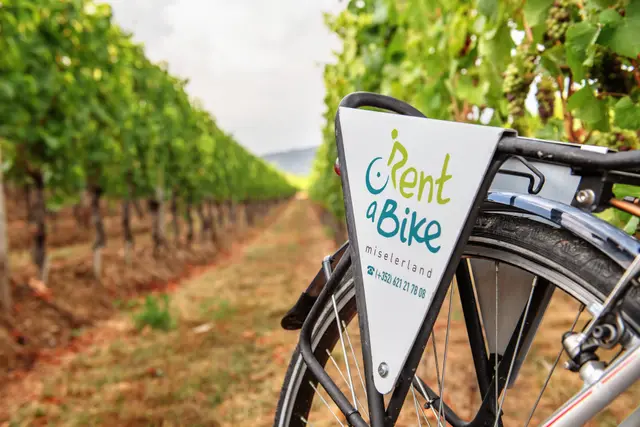
Discover the beautiful Moselle region by bicycle: explore in an active and environmentally-friendly way by cycling alongside the meandering river at the foot of the vineyards. The regional bicycle hire service is…

Read more

Discover the beautiful Moselle region by bicycle: explore in an active and environmentally-friendly way by cycling alongside the meandering river at the foot of the vineyards. The regional bicycle hire service is practical, simple and cheap to use – in line with the slogan “The Moselle moves!”. RentaBike miselerland offers free use of a helmet along with your bike. Bikes can be returned to any participating outlet.

  • 6 rue Robert Goebbels L-5444 Schengen
  • Run by Tourist Information Schengen
  • Website

On the "Place de l'Accord de Schengen" the three three columns made of Cor-Ten stell recall the signing of the Schengen Agreement on 14 June 1985.

Read more

On the "Place de l'Accord de Schengen" the three three columns made of Cor-Ten stell recall the signing of the Schengen Agreement on 14 June 1985. This monument was erected in 1997 close to the landing quay of the M.S. Princesse Marie-Astrid.

Harsh war years, countless border shifts, power struggles, negotiations, and agreements have shaped the border area and its people over centuries. Upon closer inspection, the natural landscape still reveals the scars of…

Read more

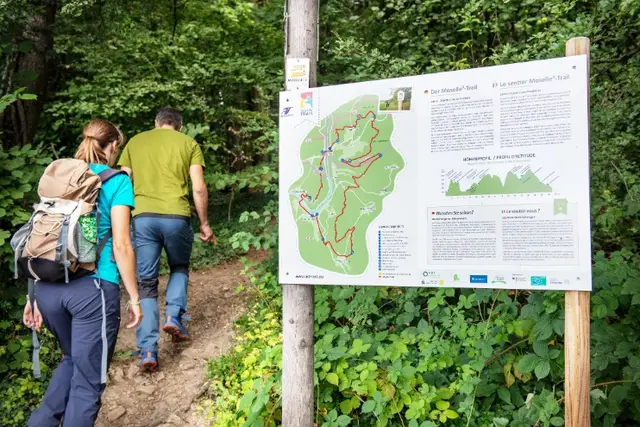
Harsh war years, countless border shifts, power struggles, negotiations, and agreements have shaped the border area and its people over centuries. Upon closer inspection, the natural landscape still reveals the scars of this time with trenches, overgrown tank barriers, bomb craters, and hidden bunkers. Thanks to the Schengen Agreement, the region has now grown into a borderless, shared living and cultural space. The M³-Trail offers the opportunity to get to know this shared living and cultural space, its people, and its history. Especially exciting stops include the European Museum in Schengen, the Château des Ducs de Lorraine in Sierck les Bains, and the German-French Peace Chapel near Perl.

  • Schengen
  • Run by Office Régional du Tourisme Région Moselle Luxembourgeoise
  • Website

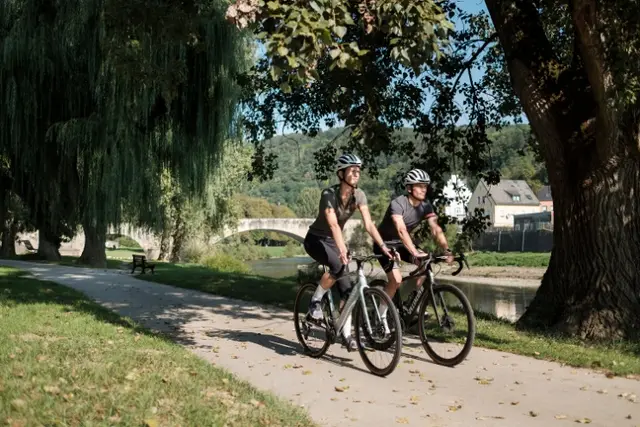
The Three Rivers Cycle Route follows the course of the Moselle between Schengen and Wasserbillig, the Sauer between Wasserbillig and Reisdorf, and finally the Our between Reisdorf and Vianden. A unique and varied part…

Read more

The Three Rivers Cycle Route follows the course of the Moselle between Schengen and Wasserbillig, the Sauer between Wasserbillig and Reisdorf, and finally the Our between Reisdorf and Vianden. A unique and varied part of Luxembourg! Remarkable sights along the route: the European Museum in Schengen, the place that gave its name to the agreement signed in 1985; the abbey town of Echternach with its impressive basilica, picturesque marketplace, and Baroque Benedictine Abbey; medieval Vianden, dominated by one of the largest and most beautiful castles from the Romanesque and Gothic periods in Europe. In Hinkel, Kulturhaff Millermoler invites you to pop in and browse through its range of regional products. It’s the perfect way to combine your bike ride with a delightful stop-off.

  • L-5446 Schengen
  • Run by Visit Moselle
  • Website
Data: Administration des transports publics and Luxembourg for Tourism, CC BY 4.0