Departures

Verlorenkost, Général Patton

Right now · Delays right now on lines 421 (+5 min).
Live · updated 20:34
  1. 29
    Hesperange, Cité Um Schlass
    20:3620:38·2 min late
    3 min
  2. 411
    Bonnevoie, Lycée Bouneweg PE
    20:40·On time
    6 min
  3. 29
    Senningerberg, Charlys Statioun
    20:43·On time
    9 min
  4. 7
    Kirchberg, Poutty Stein
    20:44·On time
    10 min
  5. 223
    Junglinster, P+R
    20:46·On time
    12 min
  6. 421
    Bonnevoie, Lycée Bouneweg PE
    20:4220:47·5 min late
    13 min
  7. 29
    Hesperange, Cité Um Schlass
    20:51·On time
    16 min
  8. 7
    Bonnevoie, Baden-Powell
    20:53·On time
    19 min
  9. 223
    Bonnevoie, Lycée Bouneweg PE
    20:5520:56·1 min late
    21 min
  10. 502
    Yutz, AéroPark P&R
    20:57·Scheduled
    22 min
  11. 29
    Senningerberg, Charlys Statioun
    20:58·On time
    24 min
  12. 29
    Hesperange, Cité Um Schlass
    21:06·On time
    31 min
  13. 411
    Remich, Gare routière
    21:08·Scheduled
    33 min
  14. 422
    Medingen, Aire de virage
    21:08·Scheduled
    33 min
  15. 29
    Senningerberg, Charlys Statioun
    21:13·On time
    39 min
  16. 7
    Kirchberg, Poutty Stein
    21:14·On time
    40 min
  17. 421
    Ahn, Alphonse Steinès
    21:18·On time
    43 min
  18. 422
    Bonnevoie, Lycée Bouneweg PE
    21:20·On time
    46 min
  19. 29
    Hesperange, Cité Um Schlass
    21:21·On time
    46 min
  20. 7
    Bonnevoie, Baden-Powell
    21:23·On time
    49 min

Live times from mobiliteit.lu, refreshed every 30 seconds.

Near Verlorenkost

Natural history and the natural sciences are presented here in a simple yet fascinating way: in addition to its permanent exhibition, the “natur musée” regularly hosts special and focused exhibitions all about plants,…

Read more

Natural history and the natural sciences are presented here in a simple yet fascinating way: in addition to its permanent exhibition, the “natur musée” regularly hosts special and focused exhibitions all about plants, animals and the universe. It’s educational, lively and unusual. The museum’s two gardens, shop and cafeteria are also pleasant places to spend time. The museum is located in the charming Grund district and can be easily reached via the lift from the Plateau St. Esprit or on foot along the picturesque cobbled streets surrounding the Corniche.

  • 25 Rue Münster L-2160 Luxembourg City
  • Run by 'natur musée'
  • Website

The Wenzel circular route takes you through the 1000-year history of the city of Luxembourg. During the route, you will discover the oldest districts of the capital as well as preserved fortifications, which were added…

Read more

The Wenzel circular route takes you through the 1000-year history of the city of Luxembourg. During the route, you will discover the oldest districts of the capital as well as preserved fortifications, which were added to the UNESCO World Heritage List in 1994. Among other things, this route takes you to the Bock Rock (the cradle of the city of Luxembourg), the castle bridge built in 1735, and the Corniche panorama path, known as "the most beautiful balcony in Europe." The route was named in memory of Wenzel II, Duke of Luxembourg between 1383 and 1419. During his reign, part of the third ring wall, the so-called Wenzel Wall, was built to protect the residents of the valley. It is possible to book this route as a guided tour with a guide.

  • 30 Place Guillaume II L-1648 Luxembourg
  • Run by Luxembourg City Tourist Office
  • Website

The circuit bears the name of the famous French military engineer, active during the reign of Louis XIV, Sébastien Le Prestre de Vauban (1633-1707). Appointed commissioner for fortifications at the age of just…

Read more

The circuit bears the name of the famous French military engineer, active during the reign of Louis XIV, Sébastien Le Prestre de Vauban (1633-1707). Appointed commissioner for fortifications at the age of just twenty-two, Vauban built or enlarged more than 160 fortresses in total. When he arrived in Luxembourg with the French enemy troops, the Spanish held sovereignty over the fortified city, which from the Middle Ages onward had been ruled by a number of foreign powers in turn. Following the traces of Vauban (General Commissioner for Fortifications), you will discover sites that bear witness to Luxembourg’s military past, experience the medieval charm of the old Lower Town of Pfaffenthal and, from the fortified heights, enjoy breathtaking panoramic views of the city. Developed into a federal fortified city during the Prussian era, Luxembourg was deemed impregnable right up until its demolition.

  • 30 Place Guillaume II L-1648 Luxembourg
  • Run by Luxembourg City Tourist Office
  • Website

Luxembourg is full of life. With its international flair and the many languages that echo through its streets, it is a modern, vibrant city. Yet at the same time Luxembourg is a place in which history is very much a…

Read more

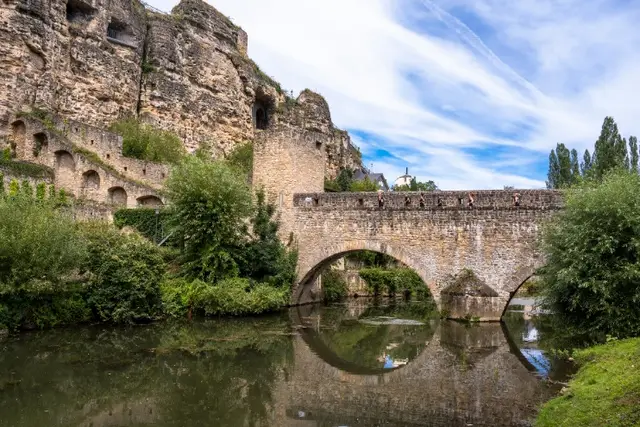
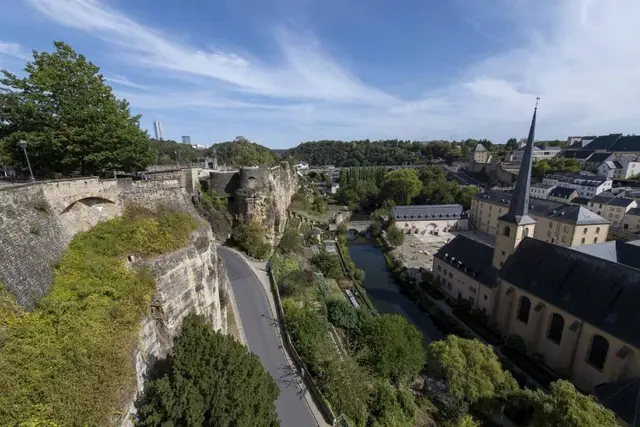
Luxembourg is full of life. With its international flair and the many languages that echo through its streets, it is a modern, vibrant city. Yet at the same time Luxembourg is a place in which history is very much a sensory experience. The remains of the old fortress, the “Gibraltar of the North”, from which the city and country were defended in times gone by, are to be found everywhere. A view of the mighty walls from the leafy Grund district, while strolling along the Alzette past the Neumünster Abbey, is especially beautiful. From this vantage point one can look up at the impressive Bock cliffs, one of the most important UNESCO sights. The subterranean casemates are the longest in the world, with windows carved out of the stone at regular intervals. Nowadays, the structural witnesses of this defensive past blend harmoniously with the cityscape. Many of them have undergone a metamorphosis. For example, you need to take a closer look and explore the interior to discover the fortress walls beneath the Villa Vauban built in the classical style in 1873. Today’s art museum is surrounded by a lavishly laid out magnificent park, which invites you to stroll and breathe deeply. A visit to the Dräi Eechelen Museum in the vicinity of the Mudam Contemporary Art Museum is a trip into both past and present at once. In turn, the latter building is a symbiosis of past and present. Surrounded by fortress walls, the museum itself is a modern and impressive edifice by star architect Pei, with exhibition rooms bathed in light, showcasing contemporary art. One thing is evident in Luxembourg: the UNESCO World Heritage remains are not redolent of a museum but rub shoulders with modernity. A city characterised by tolerance and conviviality, it is a city that is “Naturally Europe”. Experience UNESCO in the Visitor Center At the heart of the world heritage site is the “UNESCO Visitor Center” in the Lëtzebuerg City Museum, a place for immersing oneself in UNESCO world cultural heritage history, its significance and distinctive features. Displays, some of them interactive, show the protected Old Town and Fortifications. Anyone looking out of the window can compare models and drawings directly with reality. And anyone completing the 2.5 km long UNESCO Old Town and fortress walking tour can experience the world heritage site in less than 90 minutes. UNESCO programme and up-to-date information

  • Vieille Ville L-2011 Luxembourg City
  • Website
Data: Administration des transports publics and Luxembourg for Tourism, CC BY 4.0